
Category: Uncategorized

  • New York’s World Cup Transit Plan Will Change How Millions Get Around in 2026

    New York’s World Cup Transit Plan Will Change How Millions Get Around in 2026

    New York is preparing for one of the biggest transportation tests in its history.
    A World Cup travel plan for summer 2026 will alter how residents, commuters and visitors move across Midtown Manhattan and into New Jersey on eight high-demand match days.

    Midtown streets will be reworked around World Cup match days

    New York City officials on May 29, 2026 announced a Midtown transportation plan tied to the eight FIFA World Cup match days in the region, part of a broader effort with NJ Transit, the MTA, the Port Authority and the New York New Jersey Host Committee. The matches at MetLife Stadium in East Rutherford, temporarily branded as New York New Jersey Stadium for the tournament, are scheduled for June 13, 16, 22, 25, 27 and 30, plus July 5 and the final on July 19.

    Mayor Zohran Kwame Mamdani said each of those dates will be treated as a “Gridlock Alert Day,” with officials discouraging non-essential driving into Manhattan. The city plans to work with businesses to reduce truck deliveries in Midtown during peak periods and steer more people onto subways, buses, ferries and commuter rail. City officials say the goal is to protect everyday travel for New Yorkers while handling a global sports surge.

    The street changes are substantial. On match days, 42nd Street will become a bus and shuttle corridor from First Avenue to Twelfth Avenue, while the two eastern-most lanes of Sixth Avenue from 42nd Street to 59th Street will be dedicated to buses and shuttles. Existing bus lanes on Fifth Avenue between 42nd and 59th streets will also be used to move World Cup traffic more quickly.

    Officials said bus and Access-A-Ride service in Midtown could face diversions or delays, especially between 34th and 59th streets. MTA Chair and CEO Janno Lieber said the subway system has the capacity to absorb the extra demand, underscoring the city’s central message to residents and visitors alike: the fastest way through World Cup congestion will be mass transit, not private cars.

    Stadium access will rely on controlled transit, not private cars

    The regional mobility plan unveiled by NJ Transit and the host committee on April 17 makes clear that getting to the stadium will work differently from a normal game day. Officials said the system is designed to move more than 78,000 spectators per match through a coordinated mix of rail, official shuttle buses, rideshare and limited premium parking at the nearby American Dream complex.

    There will be no general spectator parking at the stadium itself on match days. Access will be restricted to official transportation options, and private charter or unofficial bus operators will not be permitted to run matchday service. A valid World Cup match ticket will be required to buy transportation, and tickets for transit service are non-transferable and non-refundable.

    For travelers coming from New York City, official stadium shuttle buses will operate from the Port Authority Bus Terminal and from a Midtown East pickup area near Grand Central Terminal. Another Manhattan pickup point at Columbus Circle was included in the city’s transportation briefing. In New Jersey, a park-and-ride shuttle is planned from the Hackensack Meridian School of Medicine.

    Rail operations will also be tightly managed. Beginning four hours before kickoff, NJ Transit service between Penn Station New York and Secaucus Junction will be limited to World Cup ticketholders, with 40,000 rail tickets available per match. Regular commuters not attending games are being directed toward alternatives, including PATH service from 33rd Street and bus options from the Port Authority Bus Terminal.

    Prices, crowd control and the wider regional impact

    Transit pricing quickly became one of the most closely watched parts of the plan. NJ Transit originally set round-trip rail tickets at $150 and official shuttle buses at $80, arguing the surcharge would help cover the cost of operating unusually intensive service during the tournament. After public criticism and pressure from officials, the rail fare was later reduced first to $105 and then, on May 13, to $98, according to NJ Transit.

    Even with the fare cuts, the broader strategy still depends on careful crowd control at some of the busiest hubs in the country. Penn Station, Grand Central, Port Authority and Secaucus Junction are all expected to experience heavy volumes as fans mix with daily commuters and tourists. Officials have warned riders to expect crowded conditions and possible route changes, especially in Midtown and around Penn Station queuing areas.

    The plan matters beyond soccer because it amounts to a live stress test for the region’s transportation network. New York City’s subway, bus and ferry systems will continue regular service, while PATH, Metro-North and the Long Island Rail Road are expected to operate normally, though with heavier passenger loads. Officials say success will depend not just on added service, but on persuading large numbers of people to change habits and avoid driving.

    If the strategy works, the 2026 World Cup could become a demonstration of how the New York region manages major events through transit-first planning. If it falters, delays in one of the world’s most densely traveled urban corridors could ripple across millions of daily trips.
  • New York City Braces for Dangerous Flash Flooding as Officials Warn of Travel Chaos

    New York City Braces for Dangerous Flash Flooding as Officials Warn of Travel Chaos

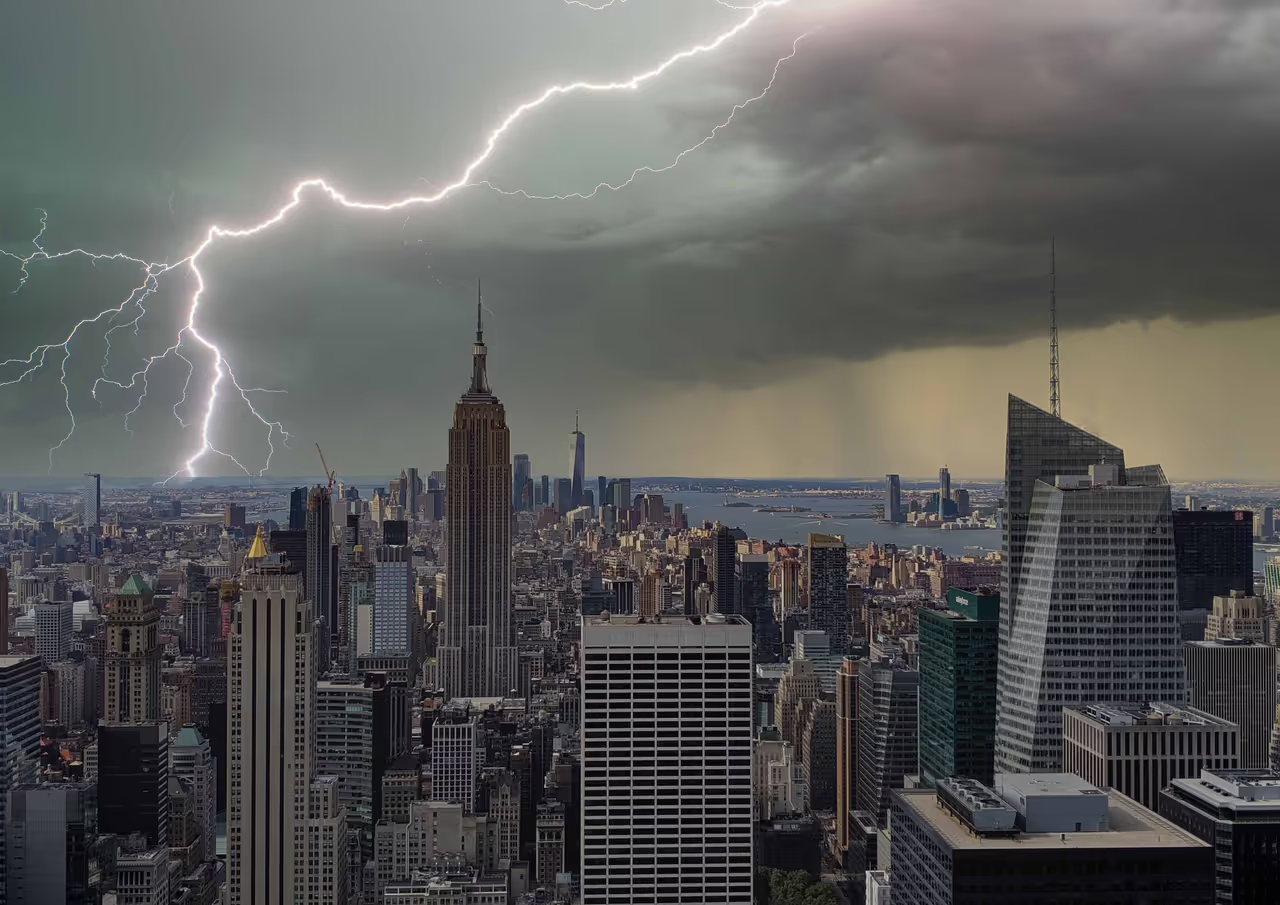
    New York City is preparing for dangerous flash flooding as officials warn that heavy rain and thunderstorms could snarl commutes, flood roadways and disrupt transit through Monday night. City emergency managers said the most significant travel impacts are expected during the Monday morning commute and may continue into the evening.

    Officials issue flood alert as storm system approaches

    New York City Emergency Management issued a travel advisory on Sunday, July 5, warning that periods of heavy rain, thunderstorms and localized flooding were expected to begin overnight and continue through the morning of Tuesday, July 7. The agency said conditions were likely to worsen late Sunday, after much of the day remained dry, and urged residents to prepare for rapidly changing weather.

    The National Weather Service issued a Flood Watch for New York City, with forecasters warning that intense rainfall rates could overwhelm drains and create flash flooding in low-lying and poor-drainage areas. Emergency officials said flooding can develop quickly with little warning, especially during summer thunderstorms that dump large volumes of rain over short periods.

    “As we’ve seen in recent storms, flash flooding can develop quickly and create dangerous conditions with little warning,” NYC Emergency Management Commissioner Christina Farrell said in the city’s advisory. Officials told residents to monitor forecasts closely, sign up for emergency notifications and avoid unnecessary travel during the worst of the storm.

    The warning comes as the broader Northeast has faced repeated bouts of dangerous weather over the past year, including storms that stranded vehicles, disrupted subways and triggered emergency declarations. Recent city advisories have emphasized that flash flooding remains one of the fastest-developing and most hazardous weather threats for New Yorkers, particularly in basement apartments, underpasses and flood-prone intersections.

    Commuters told to expect delays on roads and transit

    City officials said the greatest travel impacts were expected during Monday’s morning commute and could continue through Monday night as repeated rounds of rain move across the region. Motorists were advised to allow extra travel time, never drive through flooded streets and be prepared for sudden road closures where water collects fastest.

    Public transportation riders were also told to expect possible delays if station entrances, tracks or surrounding streets begin to flood. In past heavy-rain events, parts of the subway system have experienced service disruptions when stormwater inundated tracks and platforms, adding to the risk of citywide travel chaos during peak commuting hours.

    The city said its Flash Flood Emergency Plan had been activated, a standard step when forecasts point to potentially dangerous rainfall. That plan includes close coordination with the National Weather Service and other city and state agencies, as well as pre-storm efforts such as inspecting and clearing catch basins in vulnerable locations to reduce street flooding where possible.

    Officials again urged residents not to enter flooded basements, not to walk or drive through standing water and to move vehicles away from areas with a history of flooding. Emergency messaging also stressed the danger of floodwaters rising at night, when visibility is poor and drivers may not recognize blocked or submerged roads until it is too late.

    Why the flood threat matters for a city already on edge

    The latest warning underscores how vulnerable New York City remains to short-duration, high-intensity rainstorms that can paralyze transportation networks and threaten lives within hours. Dense development, aging infrastructure and large expanses of pavement leave many neighborhoods with limited capacity to absorb sudden downpours, increasing the risk that streets and transit hubs will flood quickly.

    City agencies have repeatedly highlighted the particular danger facing people living in basement apartments, where floodwaters can rise with alarming speed. Officials have long urged residents in such units to have an evacuation plan, monitor emergency alerts and move to higher ground immediately if water begins entering the home or if a flash flood warning is issued.

    The warning also follows other recent severe-weather alerts in the region, showing how quickly conditions can shift from extreme heat to flood danger in the middle of summer. AP has reported on earlier Northeast flooding events that stranded vehicles, disrupted rail and subway service and prompted emergency declarations, offering a reminder of the kind of cascading disruptions that heavy rain can bring.

    For now, city officials are urging New Yorkers to stay alert through Tuesday morning, keep phones charged, check on vulnerable neighbors and be ready for delays. The immediate concern is not only how much rain falls, but how fast it falls — and whether the city’s roads, rail lines and drainage systems can keep up during one of the busiest travel periods of the week.

  • Hello world!

    Welcome to WordPress. This is your first post. Edit or delete it, then start writing!